Women's Kitchen Independence: The Economic Math That Builds Real Power

Every March 8th, companies that spent the other 364 days charging women a pink tax on razors suddenly care deeply about female empowerment. You'll see wine deals, spa packages, and meal kit subscriptions dressed up with language about "celebrating you."
I'm going to talk about something else.
I want to talk about the $480 to $600 a year that a lot of women are quietly hemorrhaging — not because they're reckless, but because nobody ever handed them the actual math. And I want to talk about why, when we say "women's independence," we almost never mean the kind that happens in a grocery store.
The Generation That Got Robbed of Kitchen Knowledge — And Then Got Sold a "Solution"
There's a complicated history here that I watched play out in real time during my years doing social work in Philly. Women in their 40s and 50s who grew up being told that cooking was a trap, a domestic cage — the thing their mothers did while their fathers had careers. The feminist response was correct in spirit: cooking shouldn't be assigned to women by default. But what happened in practice is that a whole generation of women grew up without food literacy. Not because they were liberated. Because the knowledge got quietly devalued and then nobody filled the gap.
Then the market stepped in.
HelloFresh. Blue Apron. Pre-washed, pre-cut, pre-portioned everything. Grocery delivery services — many of which tack on service fees and item markups that, depending on the platform and your market, can add 10–20% or more above what you'd pay in-store. "Meal solutions." "Easy dinners." Products explicitly marketed around the promise: you don't have to know how to do this, just buy your way past it.
I'm not coming for busy women. I'm coming for the industry that profits from the knowledge gap they helped create.
Because here's the part that made me furious when I was making $32k and watching my food-insecure clients get targeted by the exact same marketing apparatus, just with different price points: food literacy is one of the highest-ROI financial skills a woman on a modest income can develop. And it costs nothing to learn. It's just math and repetition.
Let's Do the Actual Math
According to the BLS Consumer Expenditure Survey (2023 data, the most recent full-year release at time of writing), single-person households in lower-middle income brackets spent roughly $150 to $250 a month on food at home — more in coastal cities, less in smaller markets. Let's call $200 a rough working number; your actual number will vary by city and store.
Of that $200, here's where money quietly leaks:
Convenience premium on produce: Pre-cut broccoli florets at my local Philadelphia grocery run about $3.49 for 12 oz. A full head of broccoli that yields roughly the same amount: $1.29. You're paying $2.20 for someone else to make three cuts. (Prices vary by region — check your own unit prices, but the gap is almost always there.) If you buy pre-cut produce twice a week — pretty normal if you're time-anxious and the store layout is designed to make you feel like you don't have time — that's ~$18/month in convenience tax. $216/year.
Brand loyalty on pantry staples: Store-brand canned chickpeas. Name-brand canned chickpeas. Same chickpeas. Often the same factory. The premium averages $0.40 to $0.70 per can. If you're cooking with legumes twice a week (you should be, they're the best protein deal going), that's another $4 to $6 a month, ~$60 a year, for a label. Private label strategy is one of the simplest wins on a tight budget.
Ignoring promo cycles: Most grocery stores run 4-6 week sale cycles on major categories. Chicken thighs go on sale. Canned tomatoes go on sale. Dried pasta goes on sale. Women who know the cycle buy slightly ahead — nothing extreme, just a couple of extra cans when the price drops. Women who don't know the cycle pay full price every week and wonder why groceries feel unpredictable. Learning unit price math makes this gap visible. The difference on a tight budget can be $30 to $50 a month.
Add it up conservatively: $30 to $50/month back in pocket. That's $360 to $600 a year. That's a car repair fund. That's three months of a Roth IRA contribution. That's not nothing.
Why Women Get Specifically Upsold
I want to name this plainly because I watched it happen to my clients and I've experienced it myself: grocery store layout and food marketing are not neutral.
Time anxiety is the primary lever. Pre-cut produce is shelved at eye level. Meal kits have historically skewed toward women as a primary target demographic — the advertising makes this pretty clear even if it's not the exclusive audience — and are positioned explicitly around the "I don't have time to figure this out" emotion. "Easy" is the highest-value word in food marketing targeted at women — more than healthy, more than cheap, more than good. Easy.
The implicit message: you're too busy and too overwhelmed to acquire this skill. Buy your way past it.
And look, I get it. When I was working 50-hour weeks as a social worker, coming home and trying to figure out dinner felt like one ask too many. The pre-cut vegetable is not the enemy. But the learned helplessness it's selling — the idea that this is a skill you can never have so you might as well outsource it forever — that's the thing I have a problem with.
The core skills that actually give you kitchen independence are not complicated:
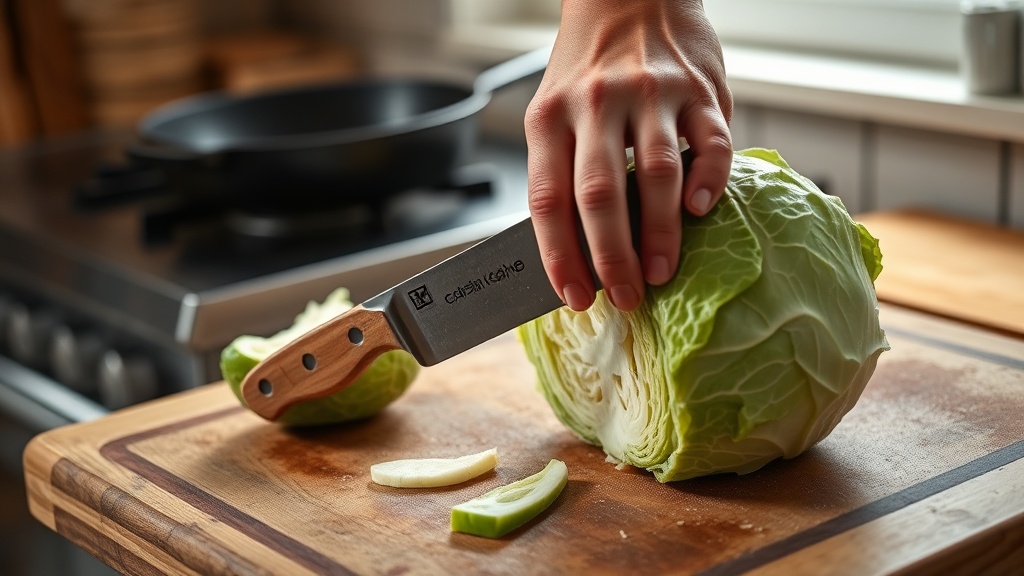
The knife skill that matters: A basic rock-and-chop on vegetables. You don't need culinary school. You need a decent $20 chef's knife and 20 minutes of YouTube. Every prep cook at every restaurant in America learned this in a week.
The pan skill that matters: Medium-high heat. Fat goes in first. Protein goes in dry (pat it with a paper towel — this is the most undersold food tip I will ever give you). Don't move it until it releases. That's a sear. That's the foundation of 40% of the dinners you'll ever cook.
The timing skill that matters: Knowing that grains and legumes cook while you do other things. Rice takes 18 minutes. Lentils take 25. You don't babysit either. A $30 instant-read thermometer takes all the guesswork out of protein doneness — chicken to 165°F, pork to 145°F — and it's genuinely the single best kitchen investment after a knife and a pan. Don't guess by color; use the thermometer.
That's it. Three skills. No stand mixer required. No $200 Dutch oven. No "pantry overhaul." Three skills, a functional pan, and a thermometer.
What Food Literacy Actually Looks Like
The women I most admired when I was coming up in Philly neighborhoods — immigrant grandmothers, single moms feeding three kids on a shift worker's income — were not making Instagram meals. They were making the most of what they had with the precision of people who couldn't afford to waste a single ingredient.
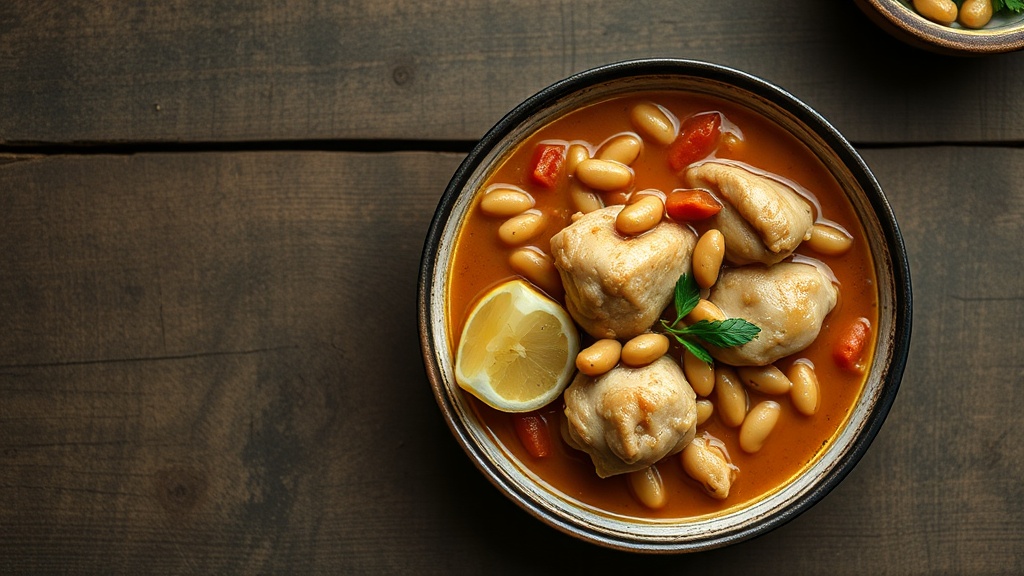
They knew their protein per dollar before "protein per dollar" was a concept anyone on a podcast was talking about. They knew that chicken thighs have more flavor than chicken breasts and cost half as much. They knew that a can of cannellini beans in a soup doubles the portion and the protein without changing the flavor. They knew that slightly overripe bananas are still perfectly edible and that the grocery store marks them down to $0.19.
This isn't deprivation cooking. It's fluency. It's the difference between someone who reads haltingly and someone who reads fast — the same information, but one costs a lot more effort and time.
The wellness industry wants to sell you "nourishment." I want you to have the thing that actually nourishes: the knowledge that means you never have to pay someone else to make your decisions about what goes in your body and your budget.
The Independence Frame Nobody Sells You
International Women's Day gets used to sell a lot of things that feel good in the moment — spa treatments, empowerment workshops, "you deserve this" messaging attached to a product you didn't need yesterday and won't remember next week.
Real financial independence is built in unglamorous moments: checking the unit price on two nearly identical products and putting back the one that costs more per ounce. Buying the whole cabbage instead of the bagged coleslaw mix. Knowing that the store-brand pantry item is identical to the branded version because you've checked the ingredients label.
None of that is content. None of it photographs well. Nobody is selling you that skill because the whole economy runs better if you don't have it.
But here's what I know from years of watching women navigate food budgets under real constraints: when you have it, something changes. You walk into a grocery store as a person who knows what things actually cost, who isn't funneled by store layout or time anxiety into the expensive shortcut. You're not budgeting from a place of anxiety. You're operating from a place of information.
That's the power. Not a recipe. Not a product. The math, yours, in your head.
You Might Also Enjoy
- Women's Day + Grocery Math: 5 Meals Under $2.50 That Actually Work — Practical meal plans built on the same economic principles
- Frozen vs Fresh Produce in 2026: The Unit Price Reality Check — The math that determines what actually costs less
Cassidy Vance is a former Philadelphia social worker and the person who will always pause in the grocery aisle to do the unit price math. Budget cooking isn't sacrifice — it's fluency.